Agentic AI Is Changing Marketing Operations
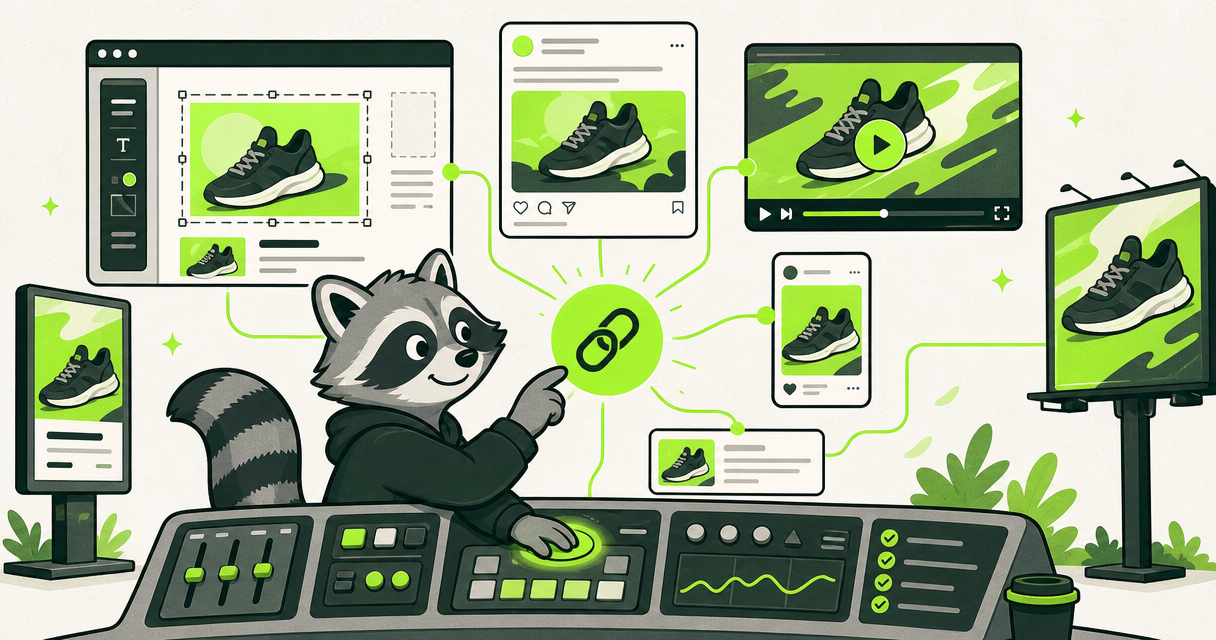
Agentic AI is moving marketing faster than most teams can manage
Agentic AI is having a moment because it promises something every marketer wants: less busywork, more output, and faster decisions. The idea is simple enough. Instead of waiting for a human to click every button, an AI system can research, draft, adapt, and act with limited supervision.
That sounds great until the content starts multiplying.
A lot of teams are discovering the same thing at the same time: once AI starts operating across campaigns, channels, and handoffs, the real challenge is not generation. It is management. Who owns the brand voice? Who approves the final version? How do you keep one tool from creating social copy that fights the landing page, while another tool invents a different offer entirely?
For marketing teams, agentic AI raises a practical question: how do you get speed without turning your brand into a pile of disconnected drafts?
That is where a more unified approach matters. Instead of stitching together a dozen tools and hoping the outputs line up, teams need systems that can produce marketing assets from real product data, keep the output editable, and preserve brand control from the start.
What agentic AI actually means for marketers
Agentic AI goes beyond a simple prompt-and-answer workflow. It can take actions across a process: pull in information, decide what to do next, and keep working without constant supervision.
In marketing, that might mean:
- turning a product link into ad concepts
- drafting social posts for multiple channels
- generating short videos from the same source material
- adapting creative for different placements and formats
- updating variations based on performance or new input
That autonomy is useful. It is also why management gets tricky fast.
The more steps an AI system can take on its own, the more important it becomes to set boundaries. Otherwise, “smart automation” becomes a machine for making inconsistent brand assets at high speed.
The four problems teams run into first
1. Fragmentation
When marketing, growth, design, and ops each adopt separate AI tools, the result is usually a patchwork. One app writes copy. Another makes images. Another handles video. Another stores the assets.
The problem is not that each tool is bad. The problem is that they are rarely built to work from the same source of truth.
That leads to familiar headaches:
- product names drift across assets
- pricing gets copied differently in every version
- visuals do not match the campaign theme
- edits live in too many places to track cleanly
For teams shipping real campaigns, fragmentation costs more than time. It chips away at trust.
2. Oversight
AI can be excellent at generating options. It is less helpful when no one knows which option is the approved one.
Without clear oversight, teams end up reviewing outputs after the fact instead of shaping them before launch. That creates a weird middle ground where AI is powerful enough to move fast, but not structured enough to keep the work accountable.
Marketing leaders need to know:
- what data the system is using
- who can edit what
- what counts as final
- how brand standards are enforced
If you cannot answer those questions, you do not have a workflow. You have a guessing game.
3. Rigidity
Some AI tools are impressive right up until you need to change something.
Maybe the offer changes. Maybe the campaign needs a new format. Maybe the brand team wants a different font, layout, or tone. Suddenly the tool that looked “easy” turns into a dead end because the output is locked down.
That is a bad fit for marketing, where flexibility is not a bonus feature. It is the job.
Marketing teams need systems that can adapt without starting over. The best workflows are not the ones that generate a finished file and call it a day. They are the ones that leave room to revise, localize, resize, and restyle without breaking the creative.
4. Scalability
A single campaign is manageable. A month of campaigns across ads, social, video, and signage is where complexity shows up.
Scaling AI across a marketing calendar means more than making more assets. It means making more assets that still feel like they came from the same brand.
If every new output requires manual cleanup, the scale advantage disappears. That is why teams need a workflow that can repeat reliably without becoming a maintenance project.
What better AI management looks like
The best marketing teams are not chasing “fully autonomous” anything. They are designing systems that are controlled, reusable, and easy to edit.
A stronger approach usually includes:
- one source of truth for product data and brand inputs
- editable outputs instead of flat, locked creative
- clear review steps before publishing
- consistent templates that still allow variation
- enough flexibility to handle new channels and offers
That combination matters because marketing is never just about speed. It is about shipping the right thing, in the right format, with the right brand feel.
This is exactly where Vidscape is useful.
Paste in a website or app-store link, and Vidscape turns it into a month of on-brand marketing: ads, social posts, short videos, and digital signage. The outputs are fully editable, so your team can change layers, fonts, colors, and frames instead of starting over. And because Vidscape pulls product names, prices, variants, and images from the real store feed, you are not cleaning up invented details after the fact.
That makes it a practical fit for teams that want agentic speed without surrendering control.
Why editable outputs matter more than raw automation
A lot of AI marketing tools stop at generation. They give you something that looks polished, but the moment you need a tweak, you are stuck.
That is fine if you only need a one-off mockup. It is not fine if you need a campaign system.
Editable creative changes the equation because it lets marketing teams do three important things:
- Keep the work on brand — If the visual or copy needs refinement, you can adjust it directly instead of regenerating from scratch.
- Move faster with approvals — Stakeholders can review real creative and request targeted edits.
- Repurpose across channels — The same concept can become an ad, a post, a video, or signage without a full rebuild.
That is the kind of workflow agentic AI should enable: not a black box, but a better production system.
The practical playbook for teams adopting agentic AI
If you are bringing agentic AI into your marketing motion, start here:
- Choose one workflow first. Do not try to automate everything at once.
- Use real product inputs. Fake data creates fake trust.
- Keep editing capabilities intact. Locked assets are a bottleneck waiting to happen.
- Define brand rules upfront. Voice, visual style, and offer hierarchy should not be improvised.
- Review for quality, not just quantity. More assets are only useful if they are usable.
The goal is not to remove humans from the process. It is to remove the repetitive parts that slow humans down.
The bottom line
Agentic AI is changing marketing operations, but not in a way that makes judgment obsolete. If anything, it makes judgment more important.
Teams that win with AI will not be the ones that generate the most content. They will be the ones that can keep creative coordinated, editable, and on-brand while moving quickly enough to matter.
If you want the speed of agentic AI without the chaos, build around workflows that preserve control. Vidscape is built for that: link in, real product data in, editable marketing out.
Ready to ship faster without handing your brand over to the raccoon-sized chaos gremlin in the machine? Give Vidscape a look and turn one link into a month of polished, editable creative.